Knee replacement is also called total knee arthroplasty. This guide explains how to prepare for surgery and what to expect during the first stages of recovery.
Your instructions will be based on your health, procedure, hospital, and recovery plan. Follow the directions from your surgeon and care team if they differ from the general information on this page.

Preparing in advance can make surgery day and the transition home easier. Complete the steps provided by DOC and contact the office if you are unsure about a test, appointment, or medication instruction.

You will need to medical clearance from your primary care provider prior to surgery. If you have a cardiologist, you will likely need clearance from them as well. We will need your clearances within 30 days of your surgical date.
Contact each physician's office to ask whether an appointment is required before the form can be completed. Do not assume clearance is complete until DOC confirms it.

DOC will tell you which tests are required and when they must be completed. These may include blood work, an EKG, or a chest X-ray based on your health and the hospital's requirements.
Complete testing at the location specified by your care team. Call DOC if you are unsure where to go or whether all results have been received.

Tell DOC about all prescription medications, over-the-counter medications, vitamins, and herbal supplements you take. Some may need to be stopped or adjusted before surgery.
Do not stop a prescription medication on your own. Follow the written medication plan provided by your surgeon, prescribing clinician, and anesthesia team. Surgery may need to be postponed if a required medication change or safety instruction is not followed.

Your pre-op visit gives you a chance to review final instructions, ask questions, and confirm your surgery timing. Bring your surgery folder and an updated medication list.
If you develop an illness, fever, skin problem near the surgical area, or another health change before surgery, call DOC for guidance.
Before surgery, plan how you will move safely through your home and who can help during early recovery.

Remove loose rugs, cords, and clutter that could cause a fall while you are using a walker or cane.

Ask a family member, friend, or caregiver to help with transportation, meals, medications, and daily tasks as needed.

Keep your phone, medications, water, frequently used items, and recovery instructions where you can reach them safely.
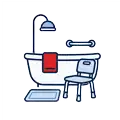
Ask your care team whether you need a shower chair, grab bar, or other bathroom equipment.

Choose a stable chair with arms and a firm seat that allows you to sit and stand safely.

You will need someone to drive you home. Plan for help with follow-up visits until your surgeon says it is safe to drive.
Recovery is gradual. Your progress will depend on your overall health, the procedure performed, your activity before surgery, and how your body responds.
Follow your discharge instructions for medications, walking, exercises, incision care, and follow-up. Do not compare your progress too closely with someone else's recovery.
You will follow up 3 weeks after surgery. You will be given your follow up appointment date and change with your surgical discharge instructions. If your appointment is not scheduled, call 217-864-2665.
Typically, you are full weight bearing immediately after surgery while using a walker for stability. Once stability is confirmed, you begin to wean off of the assistive devices.
Keep the dressing and incision clean and dry. Follow the instructions in your discharge paperwork for dressing changes and showering. Your home health nurse will remove your zip line skin closure device 2 weeks after surgery.
Take pain medication, blood-clot prevention medication, and other prescriptions exactly as directed. Before adding an over-the-counter medication or supplement, ask your care team whether it is safe with your prescriptions.
Call DOC if you have side effects, difficulty following the medication plan, or pain that is not controlled as expected. Call 911 for signs of a severe allergic reaction or another medical emergency.
Some swelling is expected after knee replacement. Use cold therapy and elevation at minimum of 3 times per day postoperatively for management of soft tissue swelling. Place fabric between the cold pack and your skin, and protect the skin from prolonged exposure.
Physical therapy and the exercises prescribed by your care team help restore movement, strength, and confidence using the knee. Follow your assigned program and ask before adding exercises or increasing activity.

Do not drive until your surgeon says it is safe. You should be off medications that impair driving and able to enter the vehicle, sit comfortably, and control the pedals with enough strength and reaction time.
Driving is typically resumed at the start of the 4th week postoperatively. This is when you brake reaction time begins to normalize.
A physically demanding job may require more time or temporary restrictions. Typically, returning to work full duty is approximately 6 weeks postoperatively.
Follow your discharge instructions for showering. Do not soak the incision in a bathtub, pool, or hot tub until it is fully healed and your care team says it is safe.
Kneeling may remain uncomfortable even after the knee has healed. Some numbness around the incision and clicking with movement can also occur after knee replacement. Contact DOC if a symptom is new, worsening, painful, or concerning to you.
Tell your dentist that you have a knee replacement. Ask your orthopedic surgeon whether you need antibiotics before a dental procedure. Recommendations can depend on the timing of the procedure and your individual risk factors.
Contact DOC if you notice:
Call 911 for sudden shortness of breath, sudden chest pain, chest pain with coughing, a severe allergic reaction, or another medical emergency.
This page provides general education. It does not replace your surgeon's instructions or emergency medical care.
Recovery happens in stages and varies by patient. Many people begin walking with assistance and start exercises soon after surgery, then gradually return to daily activities. Your surgeon and physical therapist will guide your progress based on your procedure and health.
Follow the walking plan from your surgeon or physical therapist. Increase activity gradually and use your prescribed walker, cane, or crutches until your care team says you can change or stop using them.
The timing depends on your dressing and incision-care plan. Follow the instructions in your discharge paperwork and keep the incision from soaking until it is healed and your care team gives permission.
Do not drive until your surgeon clears you. You need enough strength and control to operate the vehicle safely and must not be taking medication that impairs driving.
Swelling is common during recovery, but new, severe, or rapidly increasing swelling may require prompt medical attention. Call DOC if you are unsure whether your swelling is expected.
Increasing incision redness, drainage, fever, chills, worsening pain, calf pain, redness, tenderness, or new swelling can be warning signs. Call DOC promptly. Call 911 for sudden shortness of breath or chest pain.
Knee Resource Library
Browse symptoms, treatment decisions, procedures, and recovery information.

If you are preparing for surgery or recovering at home, call DOC when an instruction is unclear or a symptom concerns you.
