Knee surgery is not the first step for most patients. But ongoing pain, instability, or loss of function may signal that it’s time for a more detailed orthopedic evaluation.
At Decatur Orthopedic Center, we help patients understand both surgical and non-surgical treatment options based on their symptoms, imaging, and goals.
Schedule an EvaluationMost patients with knee pain do not immediately need surgery.
Treatment often begins with non-surgical options designed to reduce inflammation, improve strength and mobility, and help patients stay active. Depending on the condition, conservative treatment may include:
For many patients, these treatments can significantly improve symptoms and delay or avoid surgery altogether.
When pain continues despite these efforts, it may be time to discuss additional options.

If knee pain is making it difficult to walk, climb stairs, stand for long periods, exercise, or complete normal daily activities, further evaluation may be appropriate.
Patients often notice that simple movements become more difficult over time, including:
Related Resource:
Some knee conditions improve gradually with therapy, injections, or medication. Others continue to worsen despite treatment.
Surgery may be considered when:

Pain that continues at night or while resting may indicate more advanced joint irritation or arthritis.
Patients sometimes describe:

Instability may occur because of arthritis, ligament injury, cartilage damage, or weakness around the joint.
Common symptoms include:

Persistent swelling, reduced motion, or increasing stiffness may indicate ongoing inflammation or structural joint damage.
Patients may notice:

Knee pain that gradually becomes more frequent or limiting may indicate progressive joint damage or ongoing inflammation.
Patients may notice:

Arthritis is one of the most common reasons patients consider knee surgery. As cartilage wears away, the joint may become painful, stiff, and inflamed.
Some patients are able to manage arthritis successfully for years without surgery. Others eventually reach a point where conservative treatment no longer provides meaningful relief.

Some meniscus tears improve with time and therapy. Others continue causing pain, locking, swelling, or mechanical symptoms that interfere with movement.
The type and location of the tear often influence treatment recommendations.

Injuries involving the ACL, PCL, or other stabilizing structures can affect knee function and confidence during movement.
Depending on the severity of instability and the patient’s activity level, surgical treatment may sometimes be recommended.

Changes in joint alignment, cartilage loss, or worsening degeneration can gradually affect walking mechanics and mobility.
Early evaluation may help identify treatment options before symptoms become more severe.
Many patients assume surgery automatically means a total knee replacement. In reality, several types of procedures may be considered depending on the condition.

Arthroscopy uses small instruments and a camera to evaluate or treat certain knee problems through smaller incisions.
This approach may be used in select situations involving cartilage, meniscus, or mechanical knee issues.
Learn more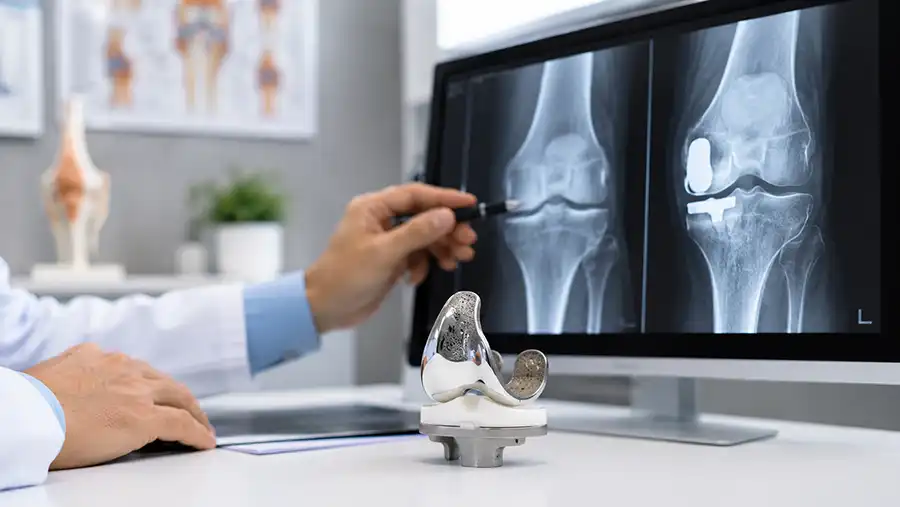
Some patients have arthritis isolated to one part of the knee joint. In certain cases, a partial replacement may be an option instead of replacing the entire joint.
Learn more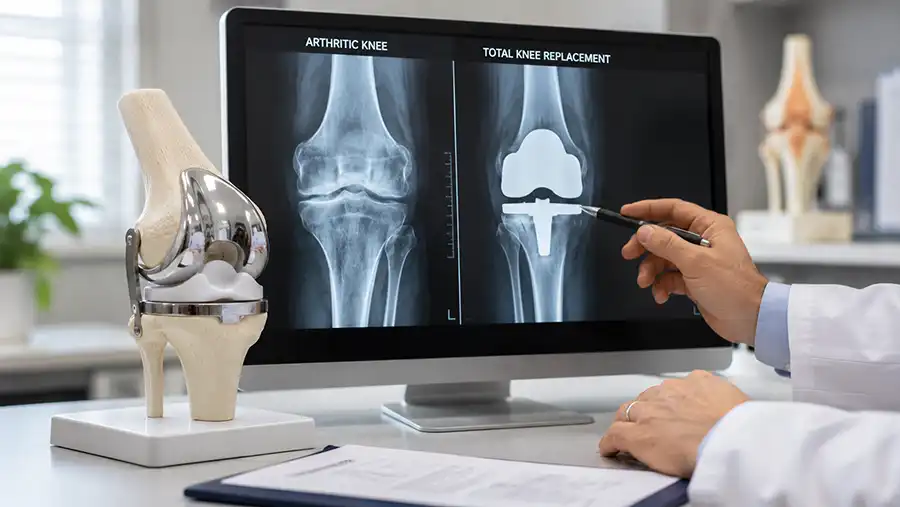
Total knee replacement may be recommended when arthritis or joint damage becomes severe enough to significantly limit quality of life and function.
Learn moreNot sure whether replacement is the right next step? Review the signs that it may be time to discuss knee replacement.
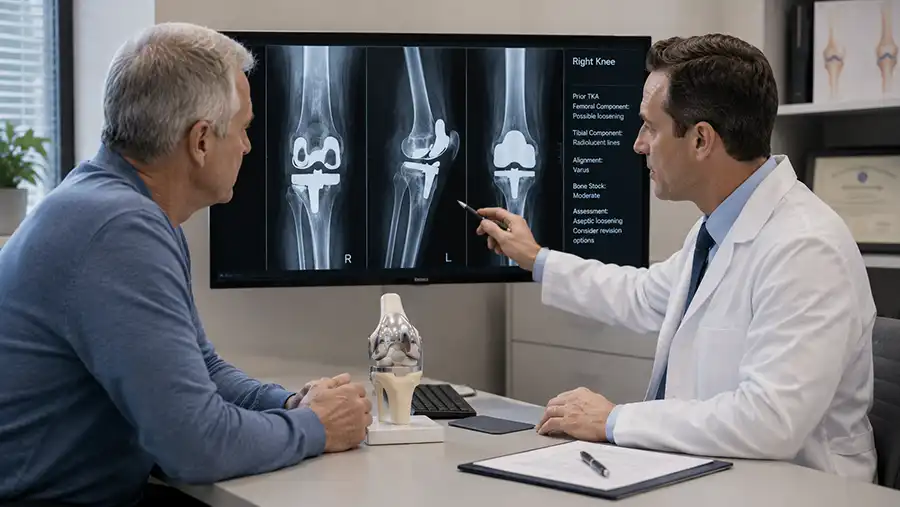
Patients who continue experiencing pain or mechanical issues after a previous knee replacement may require further evaluation.
Complex or revision cases often benefit from a detailed orthopedic assessment and second opinion.
Learn more
A second opinion may be helpful if:

An orthopedic evaluation typically includes:
The goal is to understand the source of pain and determine the most appropriate treatment approach based on your condition and lifestyle.
At Decatur Orthopedic Center, we help patients understand both surgical and non-surgical treatment options based on their symptoms, imaging, and goals.
Many patients improve with non-surgical treatment, while others may benefit from additional evaluation when pain, instability, or reduced mobility continue despite conservative care.
Treatment options may include:
You do not need to know exactly which treatment is right for you before scheduling an evaluation. The goal is to understand the cause of your symptoms and discuss the most appropriate options for your situation.
Learn more about:
Many patients seek a second opinion before making a decision about surgery, particularly for complex cases or when symptoms continue despite previous treatment.
Persistent pain, worsening mobility, instability, swelling, or symptoms that continue despite conservative treatment may indicate that a surgical evaluation is appropriate.
Yes. Many patients improve with physical therapy, injections, medication, bracing, or activity modification.
Not always. Treatment depends on symptom severity, activity limitations, imaging findings, and overall quality of life.
If injections provide limited or short-term relief, additional evaluation may help determine whether other treatment options should be considered.
Treatment recommendations are based more on symptoms, function, joint damage, and quality of life than age alone.
Many patients seek a second opinion before making a decision about surgery, particularly for complex cases or when symptoms continue despite previous treatment.
Knee Resource Library
Browse symptoms, treatment decisions, procedures, and recovery information.

If knee pain is limiting your daily life, the next step is a proper evaluation. We’ll help you understand what’s causing the issue and what your options are.
Most patients start with a simple consultation to determine the best path forward.
