Knee arthritis can make everyday activities painful and frustrating. As cartilage wears down within the joint, symptoms often progress from occasional discomfort to persistent pain and stiffness.
We help patients explore treatment options ranging from conservative care to knee replacement surgery when appropriate.
Knee pain isn't always the result of a recent injury. For many adults, arthritis is the underlying cause of persistent pain, stiffness, swelling, and difficulty with everyday activities.
As cartilage wears down within the knee joint, activities like walking, climbing stairs, and getting up from a chair can become increasingly uncomfortable.
This page explains the common symptoms of knee arthritis, available treatment options, and when it may be time to consider a surgical evaluation.

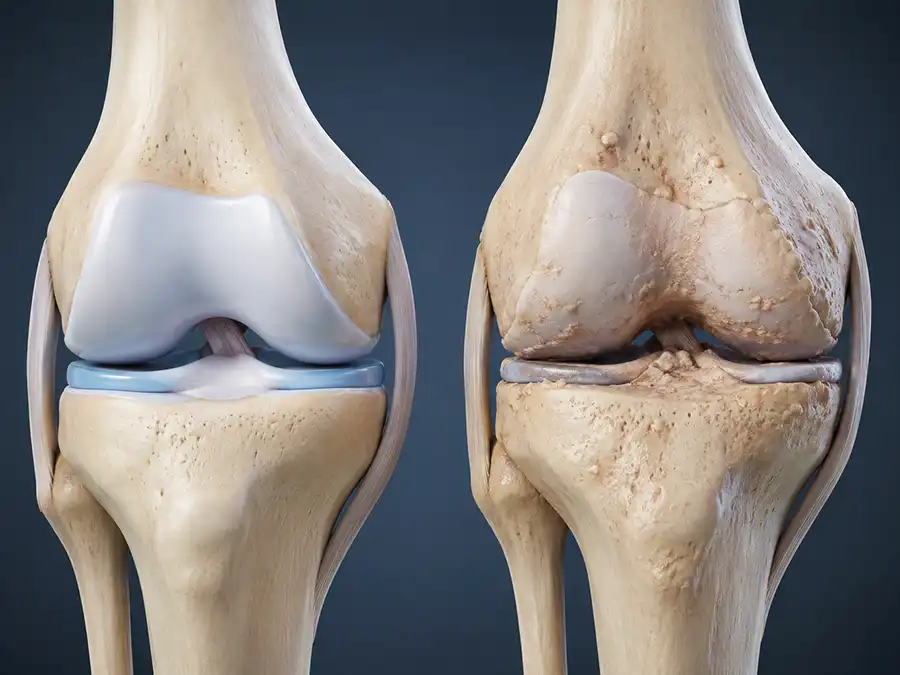
The knee joint is covered by smooth cartilage that allows the bones to move comfortably against one another.
Over time, this cartilage can wear away, reducing the natural cushioning inside the joint. As the joint surfaces become rougher, movement may become painful and inflammation can develop.
Osteoarthritis is the most common form of knee arthritis and often develops gradually over many years. Previous injuries, joint alignment issues, family history, and excess stress on the joint may all contribute to its development.
Many patients notice symptoms gradually becoming more frequent before seeking treatment.
Pain often develops during routine activities such as walking through a grocery store, exercising, or spending extended time on your feet.
Stair-related pain is common because the knee experiences increased pressure when bending under load.

Many patients feel stiffness when getting up from a chair, getting out of a car, or taking their first steps in the morning.

Inflammation within the joint can cause visible swelling and a feeling of tightness around the knee.

As cartilage wears down, some patients notice grinding, clicking, or popping sensations during movement.
Advanced arthritis may make it difficult to fully straighten or bend the knee.

An evaluation can help determine which condition is causing your symptoms.

Most patients with knee arthritis do not need surgery immediately.
However, a surgical evaluation may be appropriate when:
The decision to pursue surgery should be based on your symptoms, goals, and overall health, not simply what appears on an X-ray.
Treatment depends on the severity of arthritis, your activity level, and your goals.
Common treatment options include:
Many patients experience meaningful improvement through non-surgical treatment and are able to delay or avoid surgery for years.
Knee arthritis often causes aching pain, stiffness, swelling, and difficulty with activities such as walking, climbing stairs, or standing from a seated position. Symptoms usually develop gradually and may worsen over time.
Yes. Many patients successfully manage arthritis with physical therapy, activity modification, medications, injections, and other conservative treatments.
No. Many patients are able to manage symptoms for years without surgery. Knee replacement is generally considered when pain and functional limitations become significant and non-surgical treatment is no longer providing adequate relief.
If knee pain persists, worsens, limits your activities, or does not improve with conservative care, an orthopedic evaluation can help determine the cause and discuss available treatment options.
Knee Resource Library
Browse symptoms, treatment decisions, procedures, and recovery information.

Most patients start with a simple consultation to determine the best path forward.
If knee pain is limiting your daily life, the next step is a proper evaluation. We’ll help you understand what’s causing the issue and what your options are.
