Pain while walking may be related to arthritis, cartilage injuries, inflammation, or instability within the knee joint. Understanding the cause can help guide the right treatment and improve mobility.
Knee pain when walking is a common problem that can affect daily activity, exercise, work, and overall mobility.
Some people notice pain only after longer walks, while others feel discomfort with nearly every step. Symptoms may include aching, stiffness, swelling, instability, or a feeling that the knee is not moving smoothly.
This page explains common causes of knee pain while walking, when symptoms may need medical attention, and what treatment options may help. You can also explore our knee pain overview for broader information about symptoms and treatment approaches.
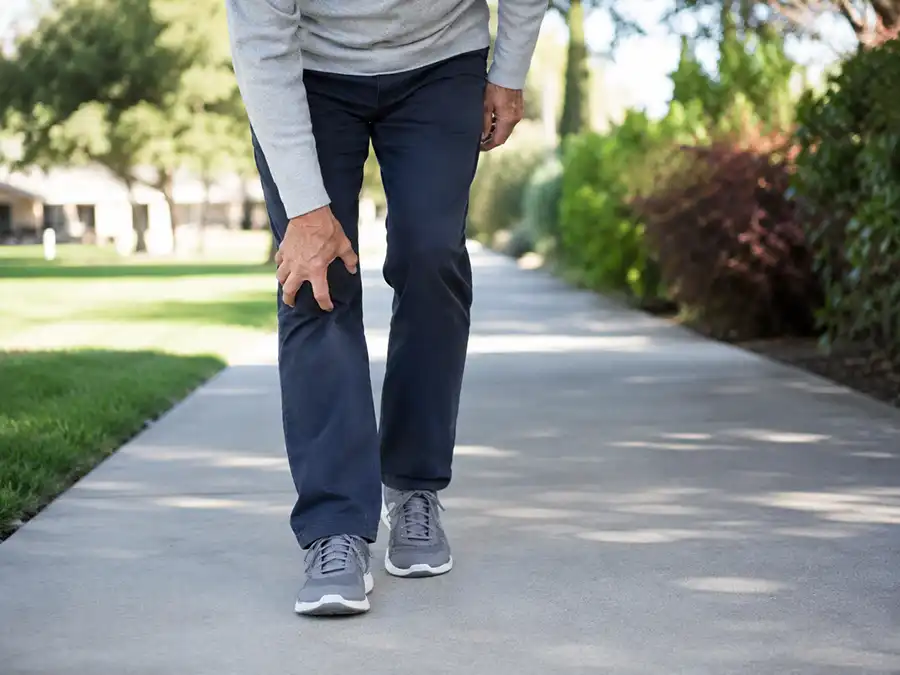
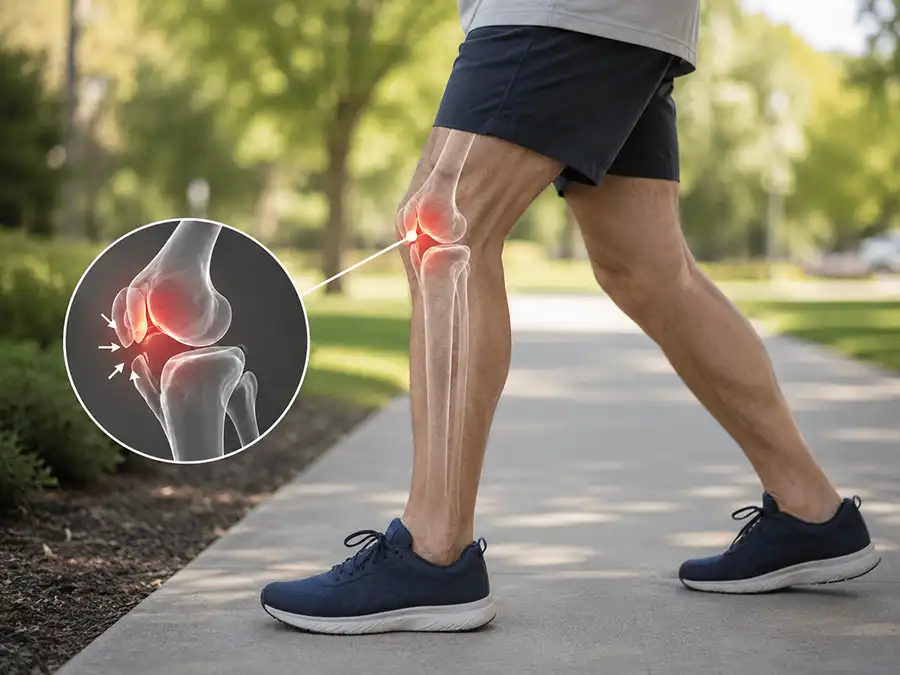
Walking places repeated stress on the knee joint with every step. When cartilage becomes worn, tissues become inflamed, or the joint is unstable, that repetitive movement can lead to increasing pain throughout the day.
Pain may become more noticeable:
In many cases, walking pain develops gradually as irritation inside the joint worsens over time.

As cartilage wears down inside the knee, the joint becomes less smooth and more inflamed. Walking often causes aching, stiffness, grinding sensations, or swelling.

The meniscus helps cushion the knee joint. Tears may cause pain with walking, twisting, squatting, or uneven movement.
Pain around the kneecap can develop when the kneecap does not move smoothly during activity. Walking, hills, and stairs commonly aggravate symptoms.

Overuse can inflame the tendons surrounding the knee, particularly in active individuals or after repetitive activity.

Weak muscles, prior injuries, or ligament problems may cause the knee to feel unstable or painful during weight-bearing activity.


If knee pain is persistent, worsening, or limiting your ability to stay active, an evaluation can help identify the cause and prevent symptoms from progressing further.
You should consider evaluation if:
Explore common treatment approaches for knee pain and mobility issues.
Walking places repeated stress on the knee joint. Conditions like arthritis, inflammation, cartilage injuries, or instability often become more painful with continued activity.
Not necessarily. Many patients with arthritis benefit from staying active, but pain should be monitored. Treatment can often help improve comfort and mobility during walking.
Stiffness after sitting or inactivity is commonly associated with arthritis, inflammation, or irritation inside the joint.
If knee pain is persistent, worsening, affecting your mobility, or causing swelling or instability, it is a good idea to have the knee evaluated.
Knee Resource Library
Browse symptoms, treatment decisions, procedures, and recovery information.

If knee pain is limiting your walking, exercise, or daily activities, the next step is a proper evaluation.
Most patients start with a consultation to better understand the cause of their symptoms and the treatment options available.
