Shoulder pain can make daily activities and sleep difficult. At Decatur Orthopedic Center, we help identify the cause and explain your treatment options.
Request a Shoulder EvaluationShoulder pain can begin suddenly or develop over time. For some people, it starts after a fall, collision, forceful lift, or throwing motion. For others, stiffness, weakness, or aching builds gradually.
Different shoulder problems can cause similar symptoms. At Decatur Orthopedic Center, we focus on identifying the underlying cause of your pain and explaining the nonsurgical or surgical options that may fit your needs.
Whether you are dealing with new symptoms or ongoing issues, an orthopedic evaluation can help clarify your next step.
Shoulder pain can come from an injury, overuse, age-related changes, or a medical condition. Common causes include:
The rotator cuff is a group of muscles and tendons that helps stabilize and move the shoulder. Because several shoulder conditions affect the same movements, pain when lifting your arm does not confirm one particular diagnosis.
Your clinician will consider how the problem began, where it hurts, which movements are difficult, and how the shoulder affects your daily life.
Read Dr. Sams's guidance about shoulder pain and rotator cuff injuries

Shoulder problems can feel different depending on the condition and the person. Common symptoms include:
These symptoms can help guide an evaluation, but they do not confirm a diagnosis.

Consider scheduling an orthopedic evaluation if:
Seek prompt medical care after a serious injury if you have severe pain, sudden swelling, visible deformity, numbness, a cold or discolored hand, or cannot raise or use the arm. Call 911 if shoulder or arm discomfort occurs with chest pressure, shortness of breath, sweating, dizziness, faintness, or nausea.

A shoulder evaluation brings together your symptoms, medical history, physical examination, and imaging when needed.
Your clinician may ask:
The physical examination may assess tenderness, motion, strength, stability, and the positions that reproduce your symptoms. X-rays can help evaluate bones, alignment, arthritis, and certain injuries. Ultrasound, MRI, or other testing may be considered when more information is needed. Not every patient with shoulder pain needs an MRI.
Treatment depends on the cause of your pain, how long it has been present, and your overall goals.
Most patients start with nonsurgical care, but the appropriate plan varies by condition.

Many shoulder problems can improve without surgery. Care may include activity changes, guided exercise, medication when appropriate, or injections for selected conditions.
Learn more
Physical therapy may help improve shoulder motion, strength, and function while supporting communication with the orthopedic team.
Learn more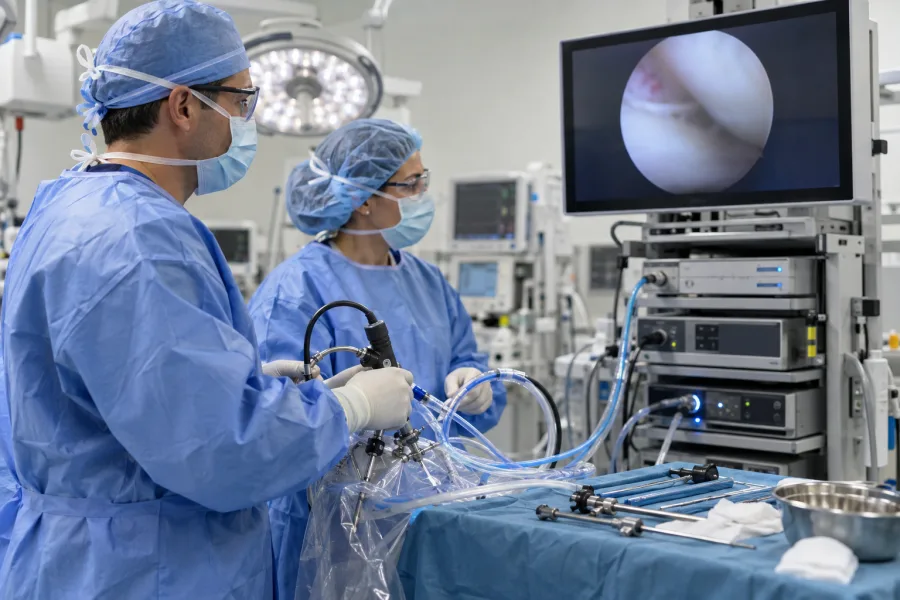
Shoulder arthroscopy may be used to treat selected rotator cuff, labral, impingement-related, or joint problems through small incisions.
Learn more
Shoulder replacement may be considered for advanced arthritis, rotator cuff tear arthropathy, certain fractures, or other serious joint damage.
Learn moreAn evaluation does not commit you to surgery. It gives you the information needed to understand the cause of your symptoms and compare appropriate options.
DOC evaluates persistent symptoms, complex injuries, prior shoulder surgery, advanced joint damage, and cases in which a patient has been told that few options remain.
A second opinion provides another careful review of your symptoms, examination, imaging, treatment history, and goals.
Shoulder pain may come from rotator cuff irritation or tears, arthritis, bursitis, frozen shoulder, instability, labral injuries, fractures, dislocations, or pain referred from another area such as the neck. An evaluation can help identify the cause of your symptoms.
Pain when lifting the arm can occur with several shoulder problems, including rotator cuff irritation or injury, bursitis, stiffness, arthritis, and other conditions. The location of the pain, how it began, weakness, motion, and examination findings help a clinician identify the likely cause.
Several shoulder conditions can cause pain at night or make it uncomfortable to lie on the affected side. Night pain is not specific to one diagnosis. Persistent pain that disrupts sleep should be discussed with a healthcare provider.
Consider an orthopedic evaluation when shoulder pain persists or worsens, follows an injury, limits motion or strength, disrupts sleep, or interferes with work, sports, or daily activities. Severe injuries, visible deformity, sudden swelling, or possible medical emergencies need more immediate care.
Not every patient with shoulder pain needs an MRI. Your clinician may begin with your history and a physical examination and may use X-rays or other imaging based on the suspected condition and the information needed to guide treatment.
Yes. Many shoulder problems can be treated without surgery. Depending on the cause, care may include activity changes, guided exercise, physical therapy, medication when safe, or injections for selected conditions. Surgery may be discussed when the type or extent of damage makes it appropriate or when suitable nonsurgical care has not provided enough relief.
Shoulder Resource Library
Browse symptoms, treatment options, surgery information, and recovery guidance.

If shoulder pain is limiting sleep, work, sports, or daily movement, an orthopedic evaluation can help identify the cause and clarify your treatment options.
You do not need to know the diagnosis before scheduling. We will listen to what you are experiencing, examine your shoulder, and explain the next steps that may fit your needs.
